Egg Donation Information

EGG DONATION

Get more information on egg donation
and how it works on the page below

If you are in San Diego County and are considering being an egg donor or making an egg donation call CACRM at 760-633-2231 for a list of agencies or to help you with any
questions about Egg Donation. info@cacrm.com

What is Egg Donation?
Egg donation (Donor Oocytes) is the process by which a woman provides eggs to another woman for purposes of assisted reproduction.

The first pregnancy achieved with egg donation was reported in 1984. Since that time, there has been increasing utilization of egg donation to help infertile couples/individuals conceive. 

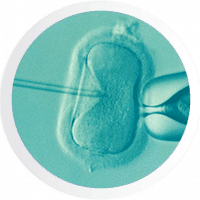
Once an Egg Donor has been chosen, she will go through the process of In Vitro Fertilization (IVF), where the eggs are obtained from the donor’s ovaries and donated to the intended recipient. 

Sperm obtained from the recipient’s partner (or Donor sperm) is used to fertilize these eggs, and embryos are transferred into the recipient’s uterus (or in some cases a surrogate).   

If pregnancy occurs, the recipient will have the opportunity to carry and deliver her baby even though it may not be her own egg. 

Egg Donation is a highly successful assisted reproductive treatment for certain types of patients. It is not without it complexities and should be entered into with the proper evaluation and screening of a Donor as well as a legal contract. 

Do I Need an Egg Donor?
An Egg Donor is needed for the following reasons: 

  • Women who have ovarian failure or are prematurely menopausal as a result of disease, chemotherapy, radiation therapy, or surgical removal of their ovaries.
  • Women with a history of poor response to IVF fertility medications and/or poor oocyte and embryo quality and who have had multiple miscarriages and/or failed IVF cycles.
  • Woman with genetic diseases or chromosomal translocations they do not want to pass on to their children. 
  • Younger women who have premature ovarian failure. 
  • An Egg Donor is also required for male homosexual couples using a surrogate to have children. 
  • Woman who were born without ovaries.


Who are Egg Donors?

There are several different types of Egg Donors. 

  • Anonymous Donors. Women who are not known to the recipient. Donors may be recruited through established egg donation programs, or may be identified through agencies.
     
  • Known or Directed donors: women who are known to the recipient. The donor is generally a close relative or friend. 
     
  • Limited Directed Donors. In some instances, recipients advertise directly for donors in newspapers or on the Internet. In these circumstances, the recipient couple and the donor are known to each in a limited way, having met without an intermediary program or agency.  

CACRM recommends using extreme caution about recruiting donors directly without having an intermediary program or agency screen donors, or without seeking legal counsel.

*IVF Program Donors: Women undergoing IVF may agree to donate their excess eggs to infertile patients. Alternatively, excess donor eggs may be donated to stem cell research. 

How Do I Find an Egg Donor?

CACRM usually recommends using a qualified Egg Donor agency to help find an donor – in the cases when a close relative or friend is not available as the Egg Donor.

Although CACRM does not provide Egg Donors, it is part of our service to you to provide you with a list of Egg Donor Agencies we work well with and to help you Evaluate the Egg Donor profiles provided by the agency and provide you feedback on who would be the most appropriate for your needs. Once an Egg Donor has been chosen or matched to you, CACRM can also help you Screen the Donor as well.

If you are in San Diego County and are considering being an egg donor or making an egg donation call CACRM at 760-633-2231 for a list of agencies or to help you with any
questions about Egg Donation. info@cacrm.com

What should I look for when Evaluating and Screeninga potential Egg Donor? 

All donors, both anonymous and known, should be screened according to the most recent guidelines recommended by the American Society for Reproductive Medicine.

 Primary Screening

  • Age 33 or younger
  • Medical and family history; birth defects / hereditary diseases
  • Medical and social history
  • Phychological screening
  • Sexual and substance abuse history
  • Physical examination (at CACRM Dr. Arnold will perform the physical examination of potential donor)
  • Infectious disease testing as per FDA rules


Secondary Screening

  • Ethnicity
  • Physical appearance
  • Interests and talents
  • Motivation for donating


Primary Screening rationale. For Egg Donors who are 33 or younger is due to the fact that younger women typically respond more favorably to ovulation induction; produce more eggs and high-quality embryos with high implantation and subsequent high pregnancy rates. If the donor is over the age of 34, recipients should be informed as to the cytogenetic risk of having a child with a chromosomal abnormality such as Down syndrome and the impact of donor age on pregnancy rates. 

Both anonymous and known donors should complete an extensive medical questionnaire that details their personal and family medical history. Included in this questionnaire should be a detailed sexual history, substance abuse history and psychological history.

 Each donor generally completes a written psychometric test prior to meeting with a mental health professional (MHP). In addition to reviewing the psychometric test, the MHP has the opportunity to further evaluate the donor, discuss the many complex ethical, and psychosocial issues she may encounter, and confirm the donor is truly able to provide informed consent for egg donation. 

A medical professional needs to review this history with the donor and conducts a comprehensive physical examination. 

In the United States, the Food and Drug Administration requires that all egg donors be screened for risk factors for, and nonclinical evidence of, communicable infections and diseases. A donor is ineligible if either screening or testing indicates the presence of a risk factor for, or clinical evidence of, a communicable infection or disease. 

The laboratory testing of all donors should include screening and testing for syphilis, hepatitis B and C, HIV-1 and HIV-2, HTLV 1&11, Neisseria gonorrhea and Chlamydia trachomatis, as well as screening for human transmissible spongiform encephalopathy and testing when risk factors for it exist. All infectious disease testing must be done and noted to be negative within 30 days before egg donation. Donors should also have documentation of their blood type and Rh status and complete blood count.

There are blood tests is to evaluate the ovarian reserve, (how young the ovaries are or how they should stimulate to fertility medications). One of the test is the AMH  ( antimullerian hormone), this is the most specific test and can be performed anytime in a woman’s menstrual cycle. 

The other 2 tests: FSH with Estradiol levels are perfomed either day 2,3 or 4 of the menstrual cycle. Other hormone tests may include Thyroid function and Prolactin levels. 

Donors may be required to undergo drug, nicotine and alcohol urine testing. 

Secondary Screening rationale.

For anonymous donors, the questionnaire should assess the donor’s motivation for donating her eggs and provide insight into the donor personality, her hobbies, educational background, and life goals. This will provide you with insight into a donor you will never meet. 

Genetic screening of donors should be based on ethnicity. Caucasian donors should be tested for the presence of a cystic fibrosis (CF) mutation. 

Donors of Asian, African, and Mediterranean descent should undergo a hemoglobin electrophoresis as a screen for sickle cell trait and thallasemias. 

If the donor is of Ashkenazi Jewish origin, CF mutation analysis, and screening for Tay-Sachs disease, Canavan disease, and Gaucher disease is indicated. 

Donors who are of French Canadian descent should be screened for CF as well as Tay-Sachs disease. 

Additional genetic testing such as Fragile X and karyotyping of the donor is not required but may be offered by individual programs as part of their standard procedure or upon the request of the recipient couple

Egg Donation for International Patients

If you are in San Diego County and are considering being an egg donor or making an egg donation call CACRM at 760-633-2231 for a list of agencies or to help you with any
questions about Egg Donation. info@cacrm.com

San Diego Fertility Articles, News and Resources

IVF Fertility Clinic San Diego
The California Center for Reproductive Medicine San Diego.

CACRM San Diego fertility clinic provides treatments, therapy and
services relating to fertility and infertility.

Call to schedule an appointment with Dr. Lori Arnold at
619-397-2950.

Google MAP to CACRM Fertility Center / Clinic

One Response to Egg Donation Information

  1. Pingback: Egg Donation, Donor Procedures, Compensation and Costs Resource Guide Goes Online | Egg Donation Agency

Leave a Reply

Your email address will not be published. Required fields are marked *

*


*

You may use these HTML tags and attributes: <a href="" title=""> <abbr title=""> <acronym title=""> <b> <blockquote cite=""> <cite> <code> <del datetime=""> <em> <i> <q cite=""> <strike> <strong>